
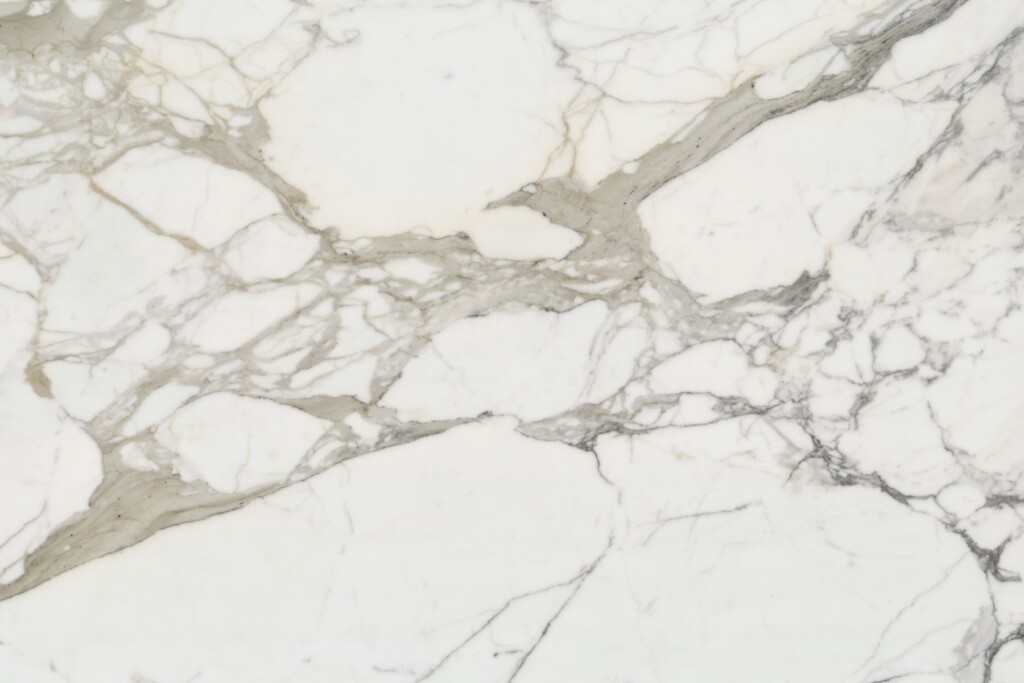

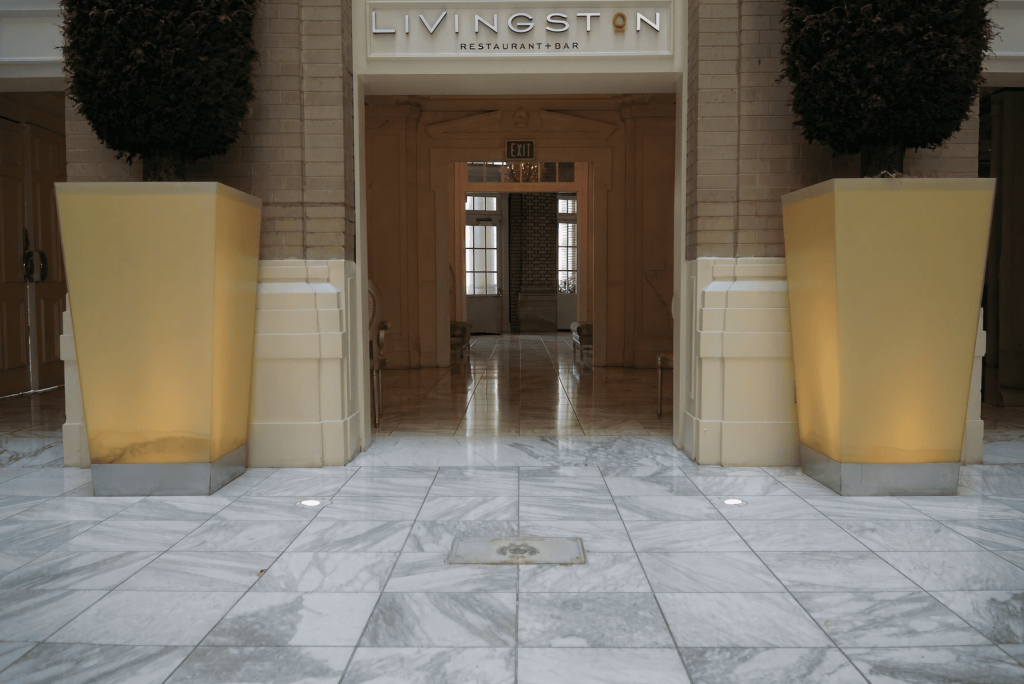

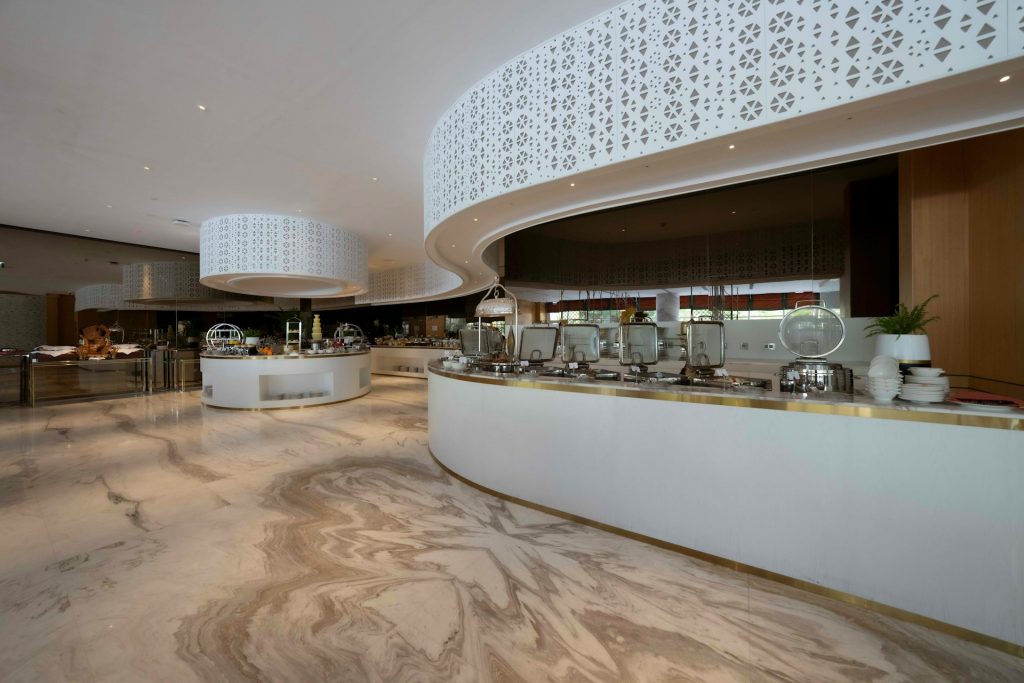


Marble countertops are easier to live with than their reputation suggests. They restore easily and absorb less than most people assume. The tradeoff is etching, which shows up as dull marks where acids touch the stone.
How much that matters comes down to the finish and the specific marble you choose.
Here’s the short version first.
The Pros
- Natural beauty with veining no man-made surface can copy
- Many marbles absorb very little water, so staining is less common than you’d think
- Easy to hone and polish back to like-new condition
- Every slab is unique
- Gives a kitchen or bath a high-end look
The Cons
- Calcitic marble etches when it meets acids like lemon, wine, or vinegar
- Polished finishes show etching more clearly
- Edges can chip, as with any stone
- Quality varies from quarry to quarry, and even block to block
- High-end marble comes with a high-end price
What Living With Marble Actually Looks Like
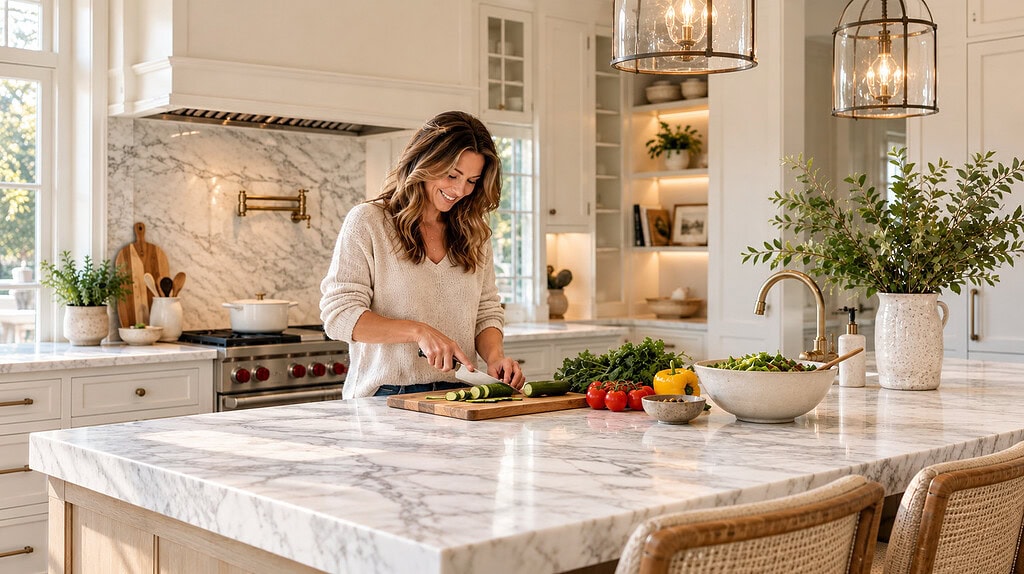
A pros and cons list can’t tell you how marble ages, so here’s what the first few years actually look like.
Install Day
Your biggest decisions happen before the stone is cut. The finish you pick, honed or polished, will shape how marble lives in your home for years.
If staining worries you, ask about sealing right after installation.
Your First Etch Mark
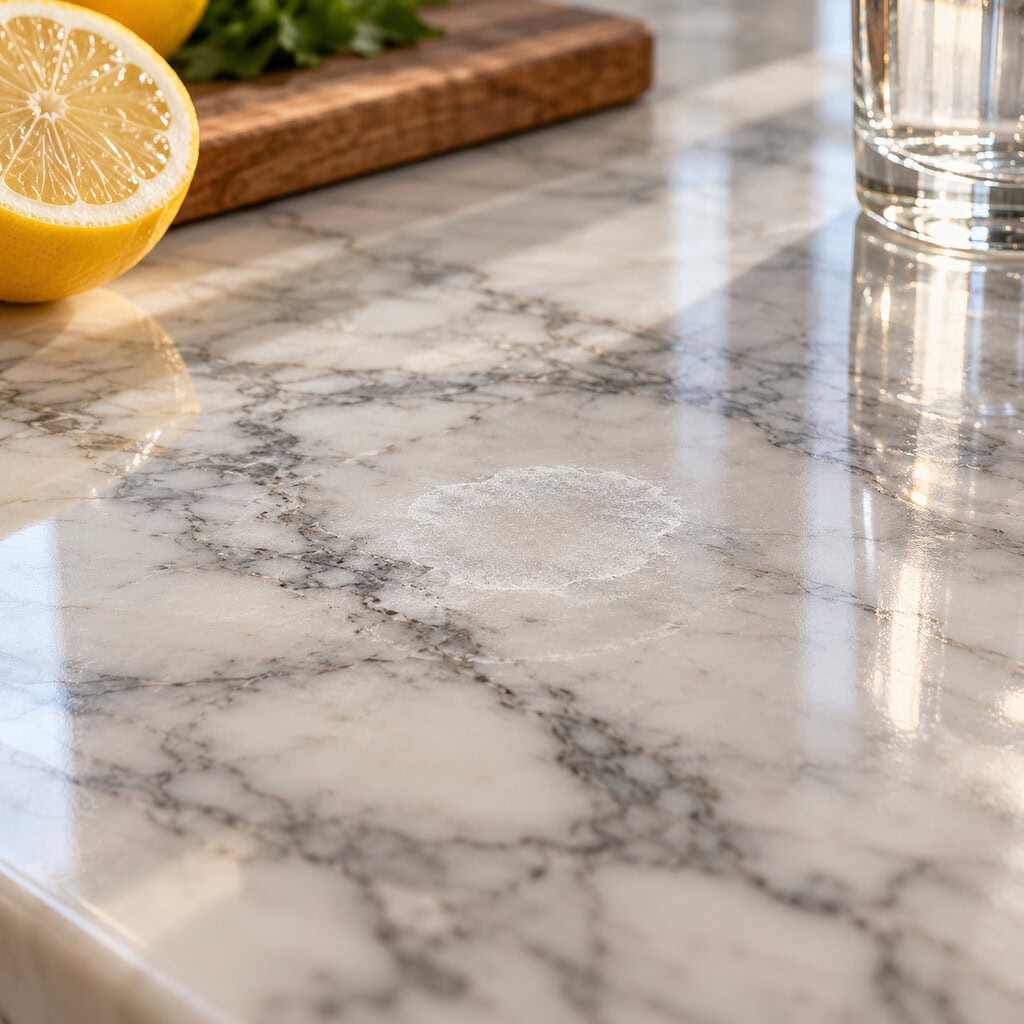
In a working kitchen, it tends to happen sooner rather than later. A splash of lemon juice or a wine glass leaves a dull spot.
That spot isn’t a stain. Etching is a chemical reaction where acid meets calcium carbonate and essentially hones the surface.
On a honed countertop, you may barely notice it. On a polished one, it will catch the light.
The First Year
Here’s where many homeowners relax. Small etches start to blend together into a soft, even, living finish.
Many people call this a patina. One homeowner wrote about her first year with marble countertops. She called her etches “a natural patina on a natural stone.”
Years Down the Road
This is where marble pulls ahead of most surfaces. A professional can hone and polish it at any time, taking off years of built-up etching.
Honed or Polished: The Decision That Matters Most
Your finish choice decides how much etching you’ll see.
| Factor | Honed | Polished |
|---|---|---|
| Etching | Far less noticeable | More noticeable |
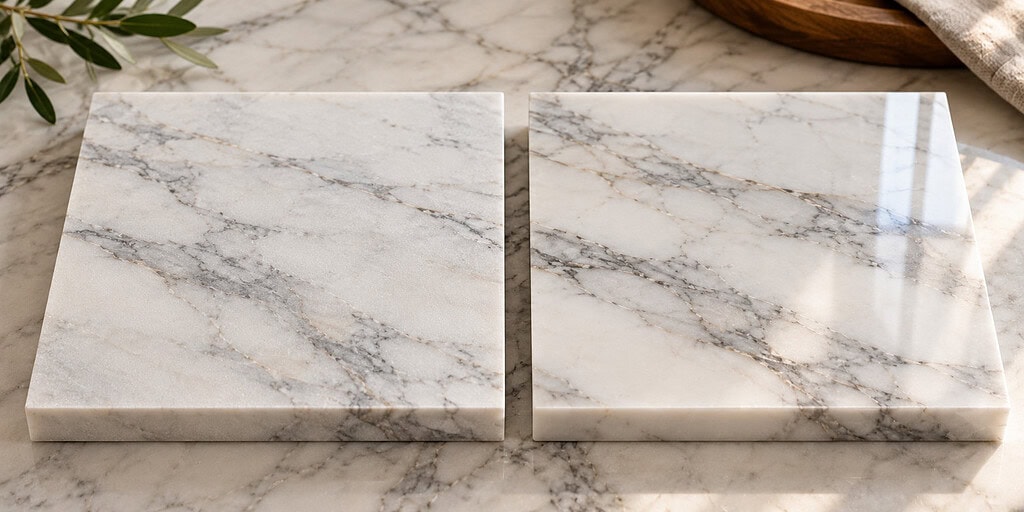
| Look | Softer and lighter, whites look whiter | More pop and contrast in the veining |
| Liquid at the surface | Absorbs slightly faster | Absorbs slightly slower |
| Best for | Kitchens and heavy-use areas | Bathrooms and lighter-use areas |
Polished has fewer microscopic openings at the surface, so liquid soaks in a little slower. That doesn’t make the stone itself more or less porous.
Is Marble for the Kitchen or the Bathroom?
Marble works in both rooms, but the best approach is different for each.
Marble Kitchen Countertops
Kitchens see the heaviest use and the most acids. Citrus, tomato sauce, wine, and vinegar all etch calcitic marble.
Go with a honed finish here. Etches blend into the matte surface instead of standing out.
Marble Bathroom Countertops
Bathrooms see far less heavy use. That makes a polished finish a safe choice, with more pop in the veining.
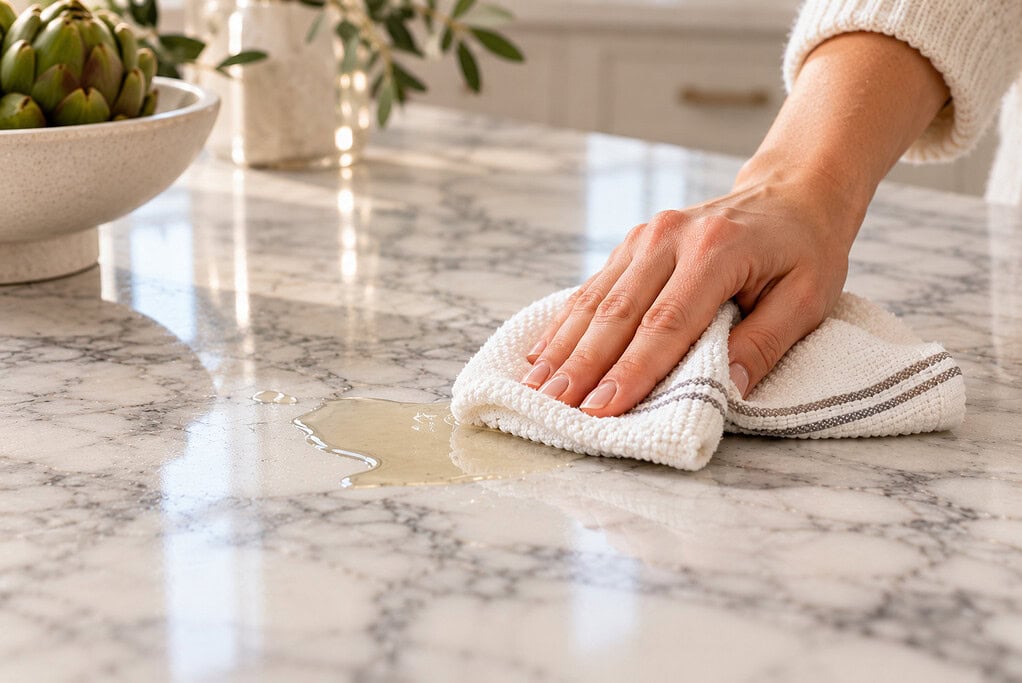
Some cleaners and toiletries are acidic, so wipe spills promptly.
Staining: Smaller Worry Than You Think
Staining is the fear we hear most. In practice, it’s rarely the problem people expect.
How much a stone absorbs depends on the specific marble. Many marbles absorb far less water than popular quartzites.
If you’re still worried about stains, a good sealer adds a layer of protection.
Should You Seal Marble Countertops?
Staining is the fear we hear most. In practice, it’s rarely the problem people expect.
How much a stone absorbs depends on the specific marble. Many marbles absorb far less water than popular quartzites, as we show in our quartzite vs marble comparison.
Sealing is optional for some marbles and smart for others. It depends on how absorbent your stone is.
The Natural Stone Institute notes that sealing makes stone more stain resistant, not stain proof. It suggests asking your supplier or sealer manufacturer how often to reseal.
To check whether your counters need it, try the water test Granite Gold recommends:
- Pour a puddle of water about 3 inches wide in a few spots.
- Leave it for 30 minutes.
- Wipe it up and look closely.
- If the stone darkened, it’s time to reseal.
Testing once or twice a year is a good habit. For kitchens, choose a sealer that’s safe for food prep.
One important note: sealing helps with stains, not etching. A sealer can’t stop acid from reacting with the surface.
Everyday Care Made Simple
Day-to-day care comes down to a few habits:
- Clean with a neutral stone cleaner, stone soap, or mild dish soap and warm water.
- Keep lemon, vinegar, and acidic cleaners off the surface.
- Skip abrasive powders and creams, which can scratch.
- Use cutting boards and trivets.
- Never mix bleach and ammonia, which creates a toxic gas.
5 Questions to Ask Before You Buy Marble
Two marbles with the same name can perform very differently. These questions help you find out what you’re really getting.
- Is this marble calcitic or dolomitic? Dolomitic marble etches far less.
- Which quarry did it come from? Every quarry, and every section within it, produces different stone.
- What’s the water absorption rate? Lab data tells you more than any sales pitch.
- Which finish do you recommend for my space? The answer should depend on how you’ll use it.
- Do you recommend sealing this stone? A good supplier will base the answer on the specific marble.
At our Atlanta showroom, we can answer every one of these for the stones we carry. We buy direct from quarries in Italy and Greece, so we know where each slab comes from.
Is Marble Right for You?
Marble rewards people who value character over perfection.
It’s a great fit if you love natural stone and plan to stay for years. You’ll also need to be fine with a lived-in finish. It’s also ideal for bathrooms, fireplaces, and entries, where etching is rarely an issue.
Think twice if you want a polished kitchen that never shows a single mark. In that case, compare your options in our quartzite vs marble guide.
Or schedule a visit with a stone specialist to see slabs in person.
Marble Countertops FAQs
Are marble countertops worth it?
For many homeowners, yes. Marble offers lasting beauty, easy restoration, and lower absorption than its reputation suggests.
What are the negatives of marble countertops?
Calcitic marble etches when exposed to acids. Edges can chip, and premium marble is expensive.
Do marble countertops stain easily?
Not as easily as most people think. Many marbles absorb very little water, and sealing adds protection.
Is honed or polished marble better for kitchens?
Honed is usually better for kitchens because it hides etching. Polished works well in bathrooms.
How often should you seal marble countertops?
It depends on the stone. Try a water test once or twice a year, and reseal if the stone darkens.
Is Dawn dish soap safe on marble?
Yes. A mild dish soap with warm water is safe, but use it sparingly to avoid leaving a film.
Can you use disinfecting wipes on marble?
It's best to avoid them. Some wipes contain citric acid, bleach, or other harsh ingredients that can dull or etch marble.
How much do marble countertops cost?
Standard marble runs about $15 to $60 per square foot for material. High-end marble ranges from $80 to $225 or more, before fabrication and installation.

