




For 2,500 years, marble has marked the buildings that matter most.
Today it still sets the tone in hotel lobbies, corporate headquarters, and fine restaurants. But specifying marble for a commercial space is a different discipline than choosing a kitchen slab.
Here’s how architects and designers get it right, from quarry selection to the final installed floor.
From the Parthenon to the Modern Lobby
Greek and Roman builders set the standard for marble architecture. Their choices still shape how we see the stone.
Greek Marble Architecture
The Parthenon was built from marble quarried on Mount Penteli, once called Pentelicon, according to PBS NOVA. That fine, white Greek stone gave classical architecture its signature glow.
Greek marble is still quarried today. Our Penteliko comes from the same tradition.
Roman Marble Architecture
The Romans favored marble from Luna, the area we now call Carrara. Trajan’s Column in Rome is made entirely of it, as the University of St Andrews notes.
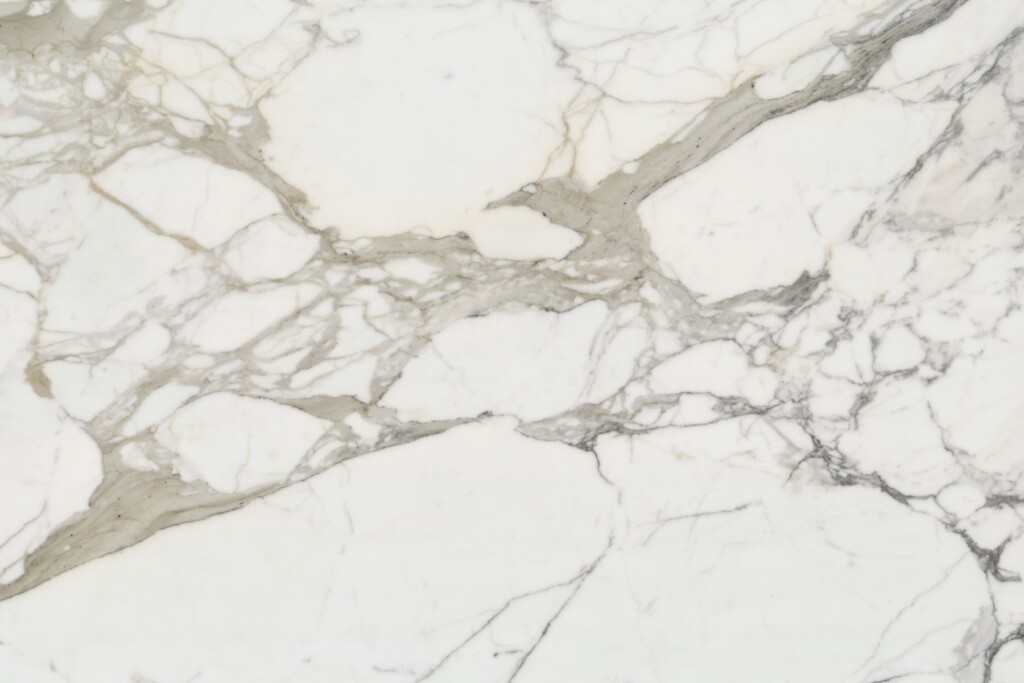
That region still produces some of the world’s most sought-after marble, including Calacatta Gold and Statuary.
Why Marble Still Signals Quality
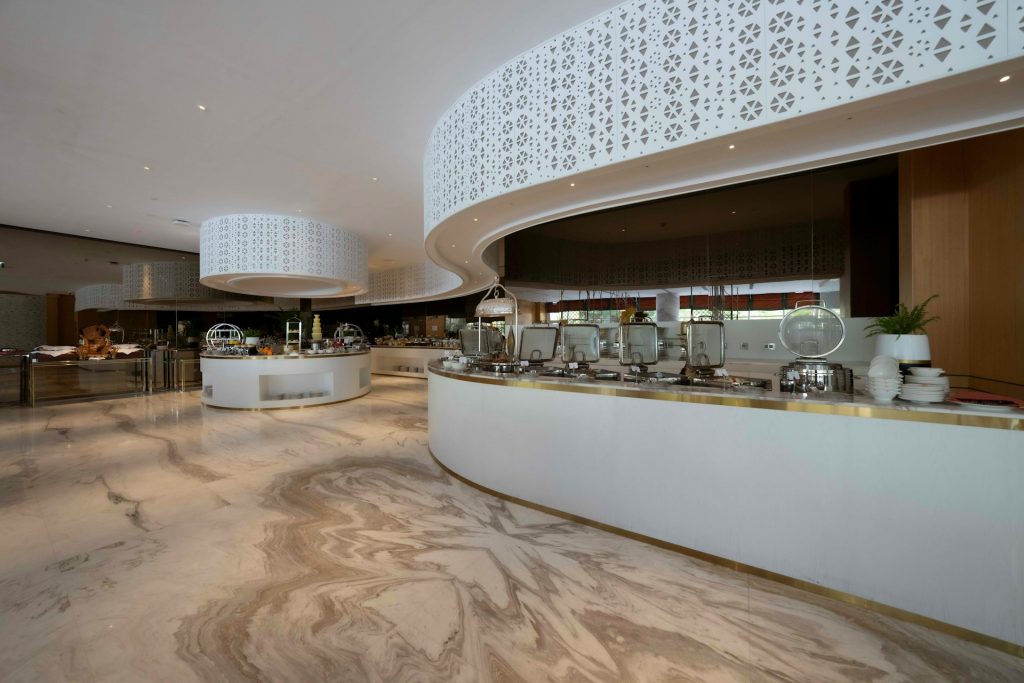
Marble changes how people feel the moment they walk into a space.
Guests read a marble lobby as a sign of quality, often without realizing it. That’s why the finest hotels, restaurants, and cafés around the world still use it.
Color plays a role too. Some designers choose stone colors to shape behavior in a space. In casinos, for example, color is chosen to encourage activity rather than lounging.
Commercial Quarries vs Boutique Quarries
This is the first question to answer on any large project. Can the quarry supply enough consistent stone for the space?
We sort quarries into two groups: commercial and boutique.
| Factor | Commercial Quarry | Boutique Quarry |
|---|---|---|
| Examples | White Carrara, Volakas | Calacatta Gold |
| Consistency | Many blocks share similar color and movement | Movement changes constantly from block to block |
| Scale | Tens of thousands of square feet is achievable | Large quantities take time and careful planning |
| Best for | Lobbies, corridors, large floor areas | Statement walls, reception desks, feature areas |
| Planning | Easier and faster to process | Requires close communication with the quarry |
A boutique stone like Calacatta Gold can still work for a large project. It just takes more time to gather enough blocks that match in movement and can cover the square footage.
Specifying Marble for Commercial Spaces
Commercial specification involves far more than picking a color. These are the factors that shape every project.
Finish and Slip Resistance
Many architects love polished marble for its dramatic pop. But in areas that may get wet, slip resistance comes first.
Honed marble has enough friction to be considered safe for walking. Even so, friction varies by marble type and by quarry.
For the best grip, rougher surfaces win. Limestone with a flamed, brushed, or tumbled finish offers the highest friction for exterior or wet areas.
Thickness, Weight, and Cladding
Stone is heavy, and the building has to carry it. Thickness affects the total weight on floors, walls, and structure.
Marble cladding follows the same logic. Weight, strength, and panel dimensions all factor into the design.
Cut-to-Size Production
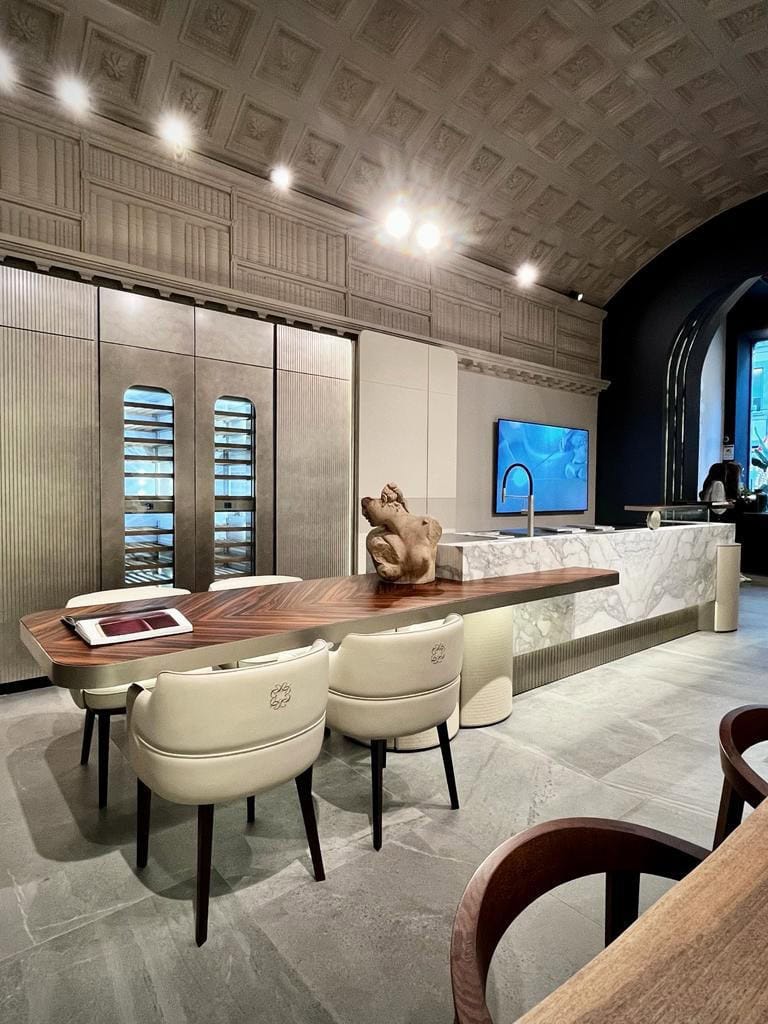
Large projects usually rely on cut-to-size stone. Pieces are custom cut at the factory to exact dimensions.
This approach handles high volume and keeps every piece consistent. Each one is made to fit its place in the project.
Matching Stone to the Space
Where the stone goes changes which stone you choose. A hotel bar, an office corridor, and a pool deck all ask different things of the material.
That includes color, finish, durability, and how the space is meant to make people feel.
Bookmatching at Commercial Scale
Bookmatching creates some of the most striking moments in commercial design. It’s also one of the hardest things to execute at scale.
What Is Book Matched Marble?
Book matched marble uses two or more slabs cut in sequence from the same block. One slab is flipped like the page of a book, so the veining mirrors across the seam.
The result is a continuous, symmetrical pattern. It’s a favorite for feature walls, reception desks, and lobby focal points.
How Large Bookmatched Projects Come Together
On big projects, large-format panels and tiles were traditionally dry laid before installation. That let the team align the pattern piece by piece.
Slabs are often aligned with a skilled fabricator. Custom orders can also be matched at the factory.
When a project needs many blocks, it comes down to communication with the quarry. We reserve and organize blocks that match in quality, pattern, movement, and color.
It’s the same reason block-level selection matters more than a stone’s name. Two blocks of the same marble can look nothing alike.
Some quarries move quickly. Others need more time to organize, so planning early matters.
Case Study: The Georgian Terrace Hotel
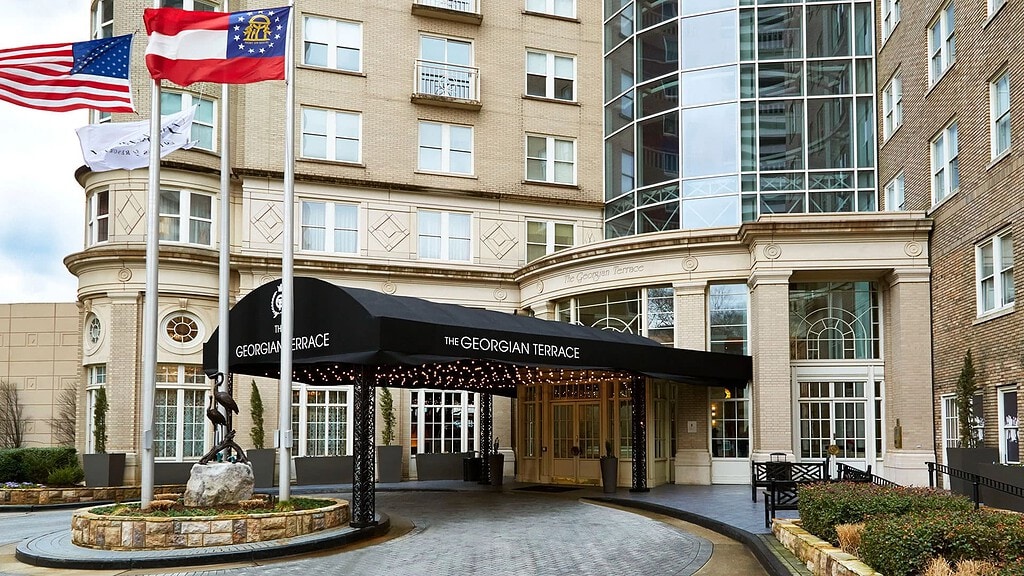
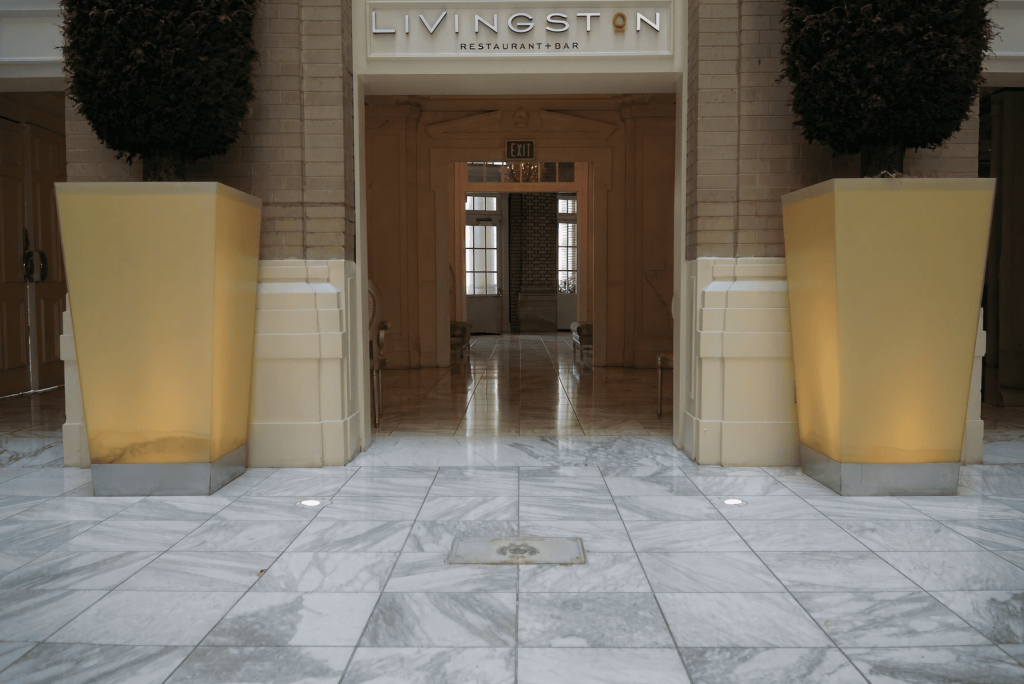
The Georgian Terrace Hotel is one of Atlanta’s landmark hotels. For its 2009 renovation, we supplied about 22,000 square feet of Volakas marble.
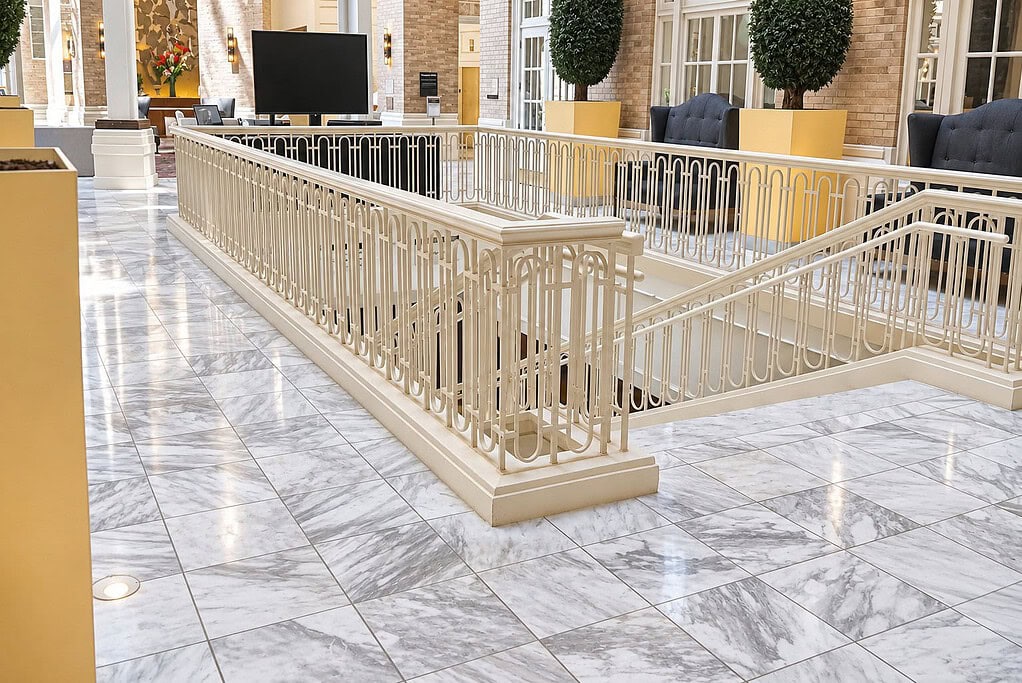
The project used 16 x 16 inch tiles in the lobby and public areas. Slabs were used for stairs, rails, and trim.
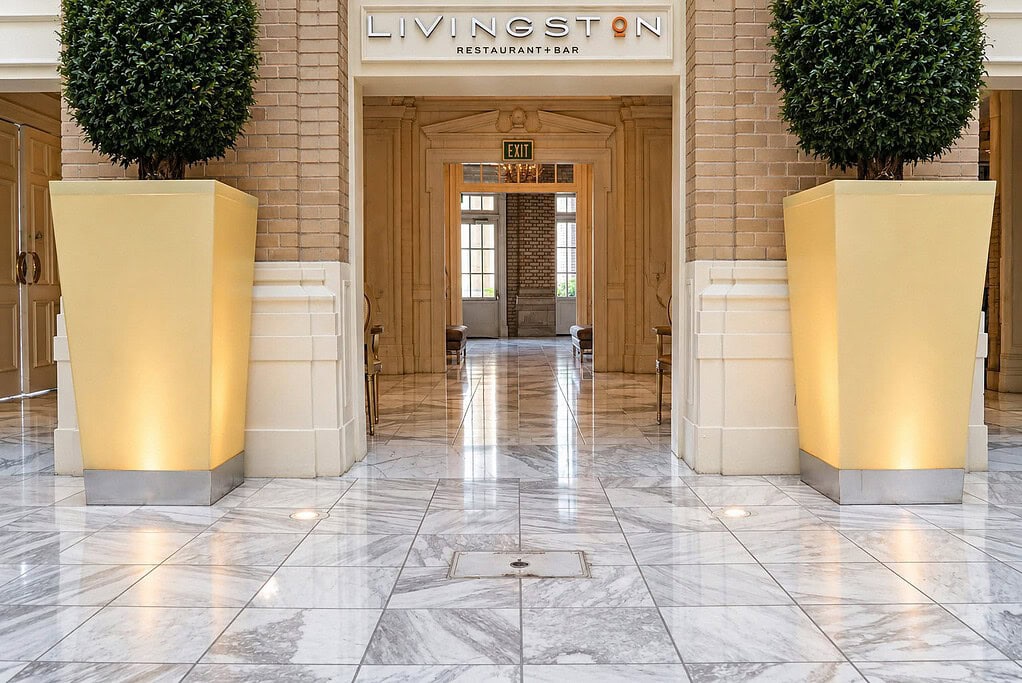
Volakas was a natural fit for a few reasons:
- Its soft gray veining holds up under warm lighting instead of competing with it.
- It’s a commercial quarry stone, so color stays consistent across a large area.
- It performs well in high-traffic spaces.
In the Livingston Restaurant + Bar, slabs were selected for tonal continuity. The floor reads as one surface rather than a patchwork, anchored by a centered medallion at the threshold.
What Architects and Designers Are Asking For Now
Commercial and high-end residential design have shifted in the last five years. Here’s what we’re seeing most often in requests.
- Warmer stone, with softer cream and gold movement
- More beige tile and classical materials like limestone
- Pairings with natural wood grain
- Checkered tile patterns
- Full-height stone backsplashes and walls
- More confidence with dramatic patterns and unique stone colors
Calacatta Gold, Statuary, Arabescato, and Nova Blanca can all deliver these looks. Like any project, they require good planning and great communication with your fabricator.
Working With a Quarry-Direct Supplier
Large commercial projects depend on supply you can count on. Working directly with the quarry makes a real difference, but only when the claim is real.
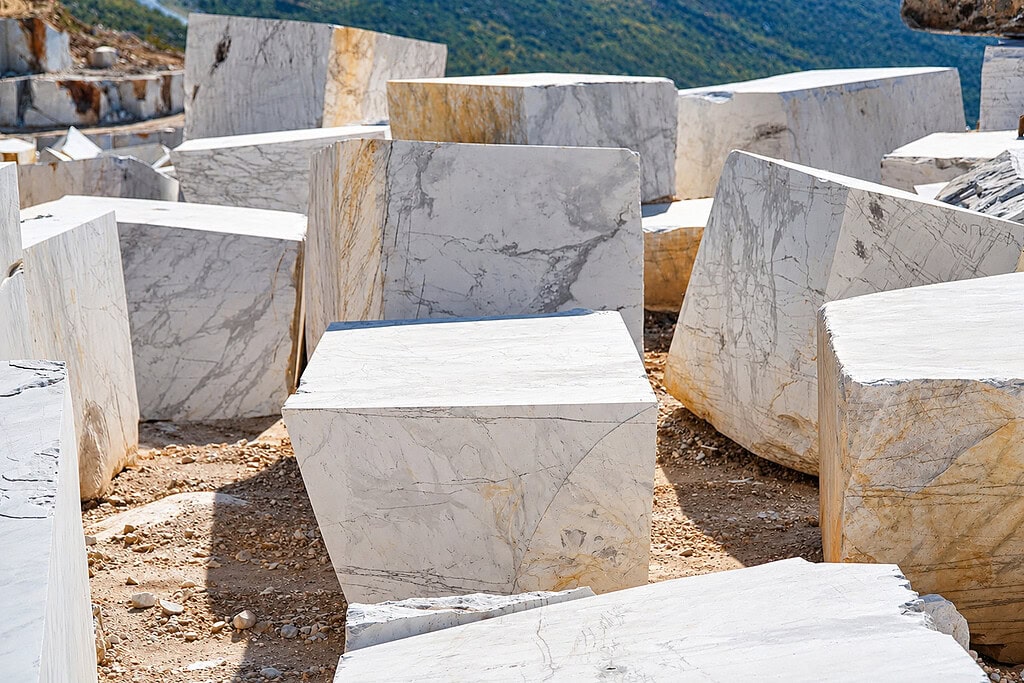
Here’s what quarry-direct actually means and why it matters. Through our trade and spec program, architects and designers get:
- Samples matched to current inventory or specific quarry lots
- Block photos and cut samples from your allocated material
- Sequential blocks with slab-by-slab documentation for large areas
- Technical data, finish options, and absorption rates
- One stone specialist from first inquiry through delivery
Standard quarry-direct lead times run about 4 to 8 weeks. In-stock inventory ships faster.
See more of our hospitality and commercial work on our projects page.
Commercial Marble FAQs
These are common questions from architects, designers, and developers planning marble for commercial spaces.
Book matched marble uses slabs cut in sequence from one block. One slab is flipped so the veining mirrors across the seam.
Yes, when the right stone and finish are chosen. Dense marbles from commercial quarries hold up well in high-traffic lobbies and corridors.
Honed marble has enough friction to be considered safe for walking. For wet or exterior areas, a rougher finish is a better choice.
Stones from commercial quarries, like White Carrara and Volakas, are easiest to supply in large, consistent quantities.
The Parthenon was built from marble quarried on Mount Penteli in Greece, known in ancient times as Pentelicon.
Marble cladding is a layer of stone panels attached to walls, inside or out. Panel weight, strength, and dimensions all shape the design.
Quarry-direct orders typically take about 4 to 8 weeks. Large or boutique stone projects may need extra time to gather matching blocks.

